Dental treatment in Düsseldorf
Periodontal treatment
Periodontitis – give your permanent teeth a chance. Early detection and treatment are particularly important.
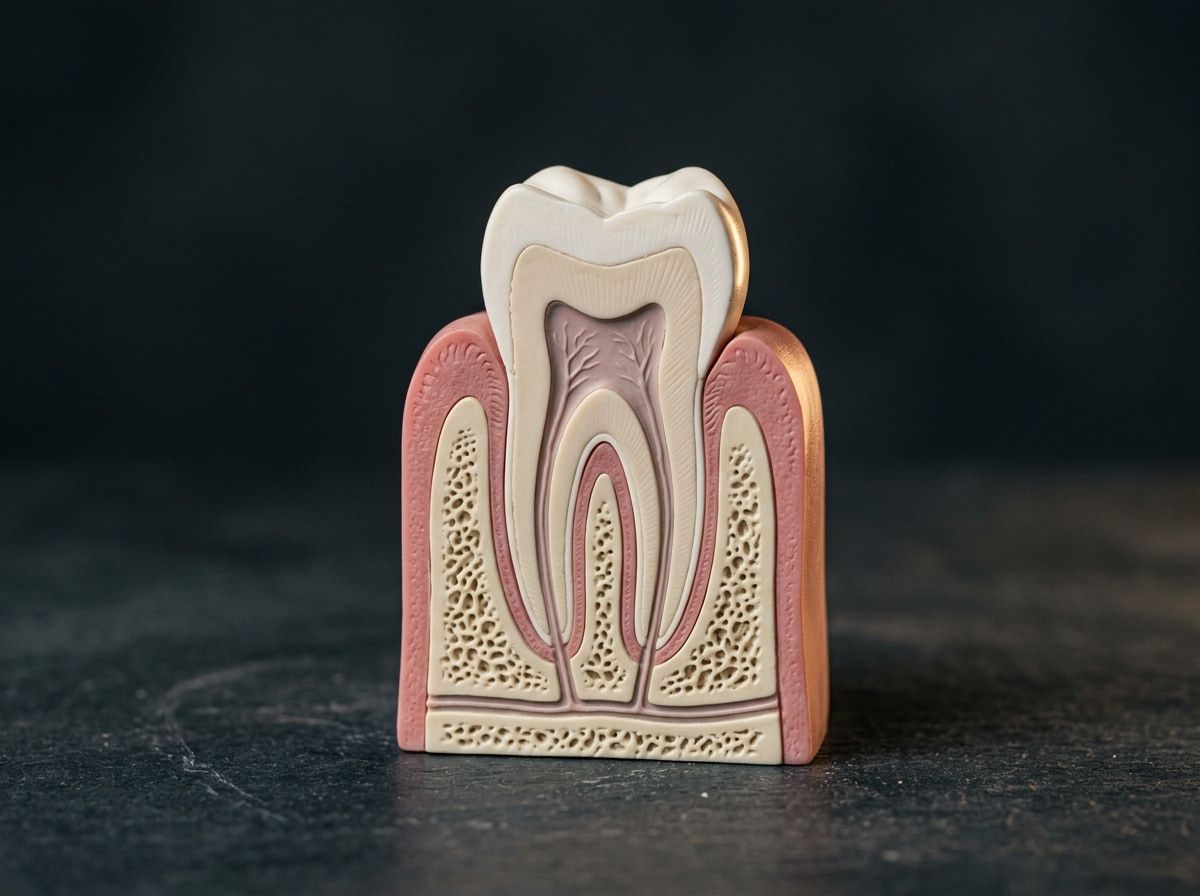
Periodontitis
Tooth loss through loosening of the teeth is a common condition that usually develops slowly. Until it reaches an advanced stage, it is accompanied by only a few symptoms that do not seem threatening, such as bleeding gums. This condition is called periodontitis (popularly also known as periodontosis). Such a disease of the tooth-supporting apparatus can be observed from the age of 16, but occurs more frequently from the age of 30. 70 per cent of people over 40 are affected by it. This is why early detection and treatment are particularly important.
The characteristic signs of this avoidable disease are bleeding gums, later receding gums (the tooth looks longer) and finally loosening of the teeth.

When it helps
Periodontitis
- Bad breath
- Bleeding gums
- Loose teeth
- Tooth loss
Our approach
Therapy
There are various modern treatments for each individual case, which should be discussed with you in a personal consultation. But the aim is always to stop the inflammation, to gently clean the gum pockets of the pathogens causing the disease (for this we use the latest scientifically recognised methods in the form of hypersonic instruments and laser) and to prevent further loss of tissue and bone.
Sometimes it also becomes necessary to regenerate lost bone so that the affected teeth can be stabilised and preserved in the long term. For this we use state-of-the-art procedures for bone and tissue regeneration, which we will be happy to explain to you should this be relevant to your treatment.
Periodontal treatment in Düsseldorf
-
Causes
The cause is deposits (plaque, tartar, concrements) that build up in the gum pockets and in the hard-to-reach spaces between the teeth and are colonised by bacteria. At first these bacteria only lead to micro-inflammation (bleeding gums), but later, over the course of many years, to the breakdown of the bone that supports the tooth. The tooth becomes loose.
-
Diagnostics
To stop the disease from progressing further, a planned and systematic approach is needed: first, bacterial plaque (deposits) and tartar must be removed as part of a preliminary treatment ("professional teeth cleaning"). This is followed by a thorough examination of the remaining inflammation and its causes.
-
Prevention
To prevent the gum pockets from being recolonised by plaque and bacteria, regular "professional teeth cleaning" should follow.
-
And what is actual "periodontosis"?
Actual "periodontosis" is also a loss of bone that leads to loosening of the teeth. However, the cause is not bacteria and the resulting inflammation, as with "periodontitis"; rather, "periodontosis" means the non-inflammatory degeneration of the bone due to overloading of the teeth. If, for example, strong grinding forces always act on the same tooth, it becomes overloaded, the bone recedes and the tooth becomes loose. This is why it is important that the dentist not only examines the teeth for periodontitis, but also checks the statics and the distribution of forces acting on individual teeth or groups of teeth. We have specialised in these functional aspects of the masticatory system and examine teeth, the tooth-supporting apparatus, jaw joints and muscles for such functional disorders, in order to recognise them early and prevent possible complaints and diseases.
Appointment
Questions about Periodontal treatment? Talk to us.
We will be happy to answer all your questions in a personal consultation.